A well-placed Botox eyebrow lift can subtly open up the eyes, create a more refreshed appearance, and enhance your natural facial balance. All without surgery.
However, achieving the best results depends on more than just the treatment itself.
From understanding the ideal injection placement to knowing who makes a good candidate and what results to expect, there are several important factors to consider before booking your appointment.
Let’s cover 7 essential things you should know about Botox eyebrow lift placement so you can make an informed decision and achieve natural-looking results.
1. What Is Botox Eyebrow Lift Placement?
How Botox Creates a Brow Lift
Two muscle groups are engaged in a tug-of-war with your brow posture. Your brows are raised by the frontalis muscle in your forehead. The furrowed, weary, or heavy appearance between and above the eyes is caused by a set of tiny muscles called the corrugators, procerus, and a portion of the orbicularis oculi pulling the brows downward and inward.
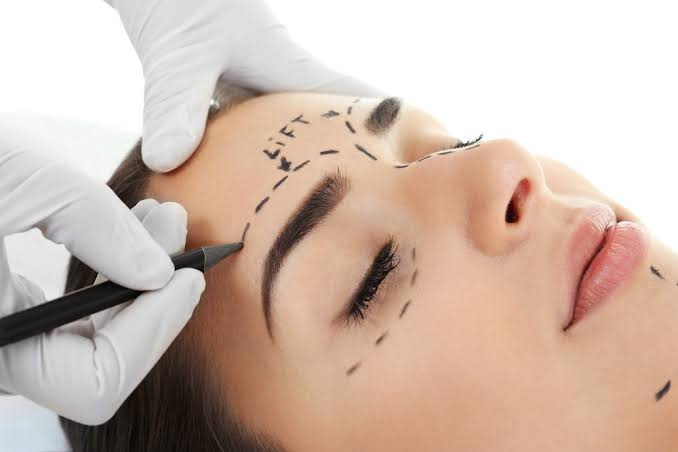
The depressor muscles, which are responsible for the pulling-down, are relaxed during a Botox brow lift. The frontalis muscle can raise the brow a little bit on its own once those muscles are quieted. This is commonly referred to as a “chemical brow lift,” because it works quite differently from filler, which modifies muscle balance by adding volume.
Many people confuse the two, so it’s helpful to understand the difference. In order to support the tissue above the brow bone or temple, filler might build structure beneath them. Contrarily, Botox only modifies the equilibrium of forces already present in your face; it adds nothing. When done correctly, nothing is added or inflated, just rebalanced, which contributes to the product’s natural appearance.
Relatable Read: What Is Brow Lamination? Benefits, Risks, and Best At-Home Kits
Why Placement Matters More Than Dose
Although it’s easy to assume that more units equate to more lift, this isn’t the case. Because the outcome depends on: Two individuals may receive the same total dose and have quite different outcomes.
- Individual facial architecture: This varies greatly from person to person, even within the same face, in terms of brow shape and muscle strength.
- Symmetry considerations: Since most faces are asymmetrical by nature, the same injection patterns on both sides may actually produce an uneven outcome.
- Natural facial expressions: Before ever picking up a syringe, a skilled injector will map out your unique movement patterns. For example, a brow lift that looks fantastic when your face is still may appear odd when you laugh or raise your eyebrows.
This is essentially the main premise of the entire treatment: positioning is what really determines whether you appear like yourself, albeit slightly brighter, while dosage gets the headlines. Because one injector mapped the muscles more precisely than the other, two injectors may use the same substance at the same total dose and get entirely different results. Because of this, choosing a brow lift provider only based on pricing per unit usually backfires; the true worth lies in the placement expertise.
2. Where Is Botox Typically Placed for an Eyebrow Lift?
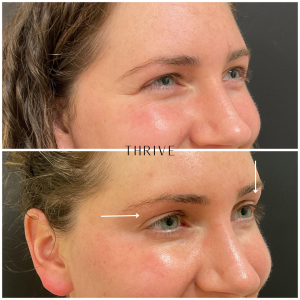
Common Treatment Areas
There are three general zones injectors work with, though not every patient needs all three.
Glabella (between the eyebrows)
When you frown, this is where the “11 lines” appear. Here, relaxing the procerus and corrugator muscles softens vertical lines and lessens the downward pull. Since it treats both the frown lines and a portion of the mechanism that pulls the brows down and together, this is actually the first location treated for many patients.
Lateral orbicularis oculi (outer eye area)
The part of the orbicularis oculi that pulls the outer brow down can be relaxed with a little, precisely positioned injection right below the eyebrow’s tail. This injection is frequently the cause of the faint “outer brow flick” that appears in well-done before-and-after photos. It is the little upward tilt at the brow’s tail end that makes the eyes appear wider without altering the face’s contour.
Forehead (in selected cases)
Since the frontalis is the muscle that raises the brow in the first place, frontalis injections are administered much more carefully. Conservative, strategic dosing is more important here than anyplace else on the face since over-treating the forehead can completely flatten the lift or even cause the brow to drop. In order to preserve the muscle fibers closest to the brow, which perform the majority of the lifting work, some injectors completely avoid the lower forehead and only treat further up.
Why Injection Locations Vary
No two treatment plans should be the same because the ideal combination relies on:
- Brow shape: The identical injection design has distinct effects on naturally arched and flatter brows.
- Muscle strength: The amount of relaxation required varies depending on an individual’s depressor muscle strength.
- Gender differences: Male patients normally desire a flatter, less arched result when it comes to brow location, whereas female patients frequently seek greater lift in the lateral third.
- Desired lift: a minor update requires a different strategy than someone attempting to specifically combat hooding.
Another important consideration is age. Patients in their 40s and older who have more obvious brow heaviness may require a little more targeted approach across all three zones, whereas younger patients wanting a preventative or mild lift typically require a lighter, more cautious injection pattern. This is one of the reasons why the initial visit with a new injector frequently involves a more in-depth discussion and occasionally a “before” picture; it provides the patient and the provider with a baseline to work from and compare against in the future.
3. Who Is a Good Candidate?
Ideal Candidates
People who are dealing with muscle-driven changes rather than significant extra skin typically benefit most from Botox brow lifts. Typically, qualified applicants have:
- Prominent but not severe sagging of the brows
- Rather than skin laxity, brow posture is the source of hooded upper eyelids.
- Early indicators of age, such as the beginning of forehead creases or a slightly heavier brow
- A desire for a non-surgical solution that requires no recovery time
Additionally, a large number of individuals are already receiving Botox for frown lines or forehead lines; they just want their injector to adjust the placement to include a lifting effect. To put it another way, you don’t always require a separate, specific “brow lift” visit; for many patients, it’s actually a tactical modification to a procedure they already receive.
When It May Not Be Enough
Botox does not tighten tissue or eliminate extra skin; instead, it relaxes muscle. This implies that it has actual limits, and an honest injector will let you know when you’ve hit them. Botox by itself probably won’t produce a good outcome if you have:
- Significant skin laxity in the brow or upper eyelid
- Heavy eyelids with hooding that is mostly a cutaneous problem rather than a muscular one
- Advanced brow ptosis, or drooping, that is more severe than muscle relaxation may treat
- A scenario in which blepharoplasty or a surgical brow lift would probably produce better, more durable outcomes
If you fit this description, a professional provider should tell you so right away instead of making unrealistic claims about the effects of Botox. One way to look at it is that while Botox can alter the brow’s tension and angle, it cannot shorten skin that is already stretched. Surgical treatments may be more beneficial than injectables alone if you gently raise your brow with a finger and notice a significant difference in how open your eyes seem. This is often a hint that skin laxity is more important than muscle position.
Relatable Read: 15 Best Skincare Brands in 2026
4. What Results Can You Expect?
Timeline
Botox doesn’t work right away; therefore, being aware of the timeframe helps you have reasonable expectations:
- Usually, the first alterations appear between days three and five.
- Once the muscle relaxation has fully taken effect, peak benefits are often seen by days 10 to 14.
- Usually, it takes three to four months before the effects begin to wear off.
Any “before” pictures and follow-up appointments should be planned around this time frame. Since minor touch-ups are considerably easier to perform at that stage than after the fact, many injectors advise a two-week follow-up expressly to ensure symmetry once the product has fully settled.
Expected Improvements
When placement is done well, patients usually notice:
- More open, less “heavy” looking eyes
- A subtle elevation at the outer tail of the brow
- Smoother skin across the forehead and glabella
- An overall refreshed, less tired appearance without looking obviously “done”
It’s important to emphasize that this is a minor adjustment rather than a significant one. The majority of skillfully performed brow lifts provide a lift of a few millimeters, which is sufficient to soften a weary expression and clearly open the eye area but not enough to significantly alter the face’s contour. It’s a warning sign to inquire if someone is claiming that Botox alone will provide a surgical-level lift.
5. What Are the Risks of Incorrect Botox Placement?
Possible Side Effects
Placement errors are the most common cause of unhappy Botox brow lift outcomes. Risks include:
- Drooping eyelid (ptosis) – usually from Botox migrating too close to the levator muscle
- Uneven eyebrows – often the result of asymmetric dosing without accounting for the patient’s natural asymmetry
- Overarched or “Spock” brows – caused by over-relaxing the lateral frontalis while under-treating the medial area
- Limited facial expression – over-treatment of the forehead can leave the face looking stiff or unable to move naturally
No matter how proficient the injector is, bruising, slight swelling, and transient redness at the injection sites are typical but usually go away in a few days and aren’t related to placement technique.
Why Injector Skill Matters
As the majority of these results have similar underlying reasons, selecting a skilled injector is just as important as the actual course of treatment:
- A thorough comprehension of the anatomy of the face and the interactions between muscles
- A personalized treatment strategy as opposed to a universal injection map
- conservative dosage, particularly for the forehead, with the option to change at a follow-up if necessary
It’s also important to remember that the majority of placement-related side effects, such as ptosis, are transient and go away when the Botox wears off over the ensuing weeks or months. It’s clearly not a cause to be casual about who administers the therapy, but if something doesn’t seem quite right after your first session, it’s helpful to know that it’s rarely permanent and that talking to your injector again is usually the best course of action.
Relatable Read: What Is Strobing in Makeup? A Beginner’s Guide to Radiant, Dewy Skin
6. How Can You Make Results Last Longer?
Longevity Tips
Even though Botox will ultimately wear off, you may maximize each treatment with a few habits:
- Observe the aftercare guidelines provided by your injector, which include not touching the treated region for the first 24 hours.
- Instead of waiting until you return to baseline, schedule maintenance treatments before the effect completely fades.
- Maintain a regular skincare routine to support your skin, as healthy skin typically exhibits more noticeable effects.
- Wear sunscreen every day since UV rays hasten the breakdown of collagen, which over time causes brow heaviness.
It’s usually more important than most individuals realize to stick to your treatment plan. After a year or two of constant treatment, some patients discover they require slightly less product or can go a little longer between treatments since muscles that are regularly relaxed with Botox often get weaker with repeated use.
Typical Maintenance Schedule
Although this varies depending on each patient’s metabolism, muscle strength, and rate of neurotoxic processing, most patients return every three to four months. Some people require more regular touch-ups, especially if they have inherently strong facial muscles or a very expressive resting expression; others stretch for five or six months as their muscles “learn” to relax with each treatment.
Since a brow lift is typically an ongoing maintenance procedure rather than a one-time outlay, cost is a relevant factor to consider. Instead of charging a fixed price for “brow lift,” pricing is usually determined by the number of units needed for your particular treatment plan. To budget for future maintenance appointments, it is therefore worthwhile to request per-unit pricing and an estimated unit range during your consultation rather than a vague total.
7. Questions to Ask Before Getting a Botox Brow Lift
Consultation Checklist
A good consultation should feel like a conversation, not a sales pitch. Before you book, it’s worth asking:
- How much experience do you have specifically with brow lift injections, not just Botox in general?
- Can you walk me through the treatment plan you’d use for my anatomy?
- What outcome should I realistically expect, and how long will it take to see it?
- What are the risks in my specific case, and are there alternatives I should consider?
- When should I come back for a follow-up, and what happens if the result isn’t symmetrical?
Requesting before-and-after pictures of the injector’s prior brow lift clients is also fair; ideally, these individuals should have brows that are comparable to your own. A provider that has experience with this particular treatment ought to be able to present a portfolio rather than only outline the method in general terms.
It’s important to take care if an injector appears hurried throughout the session or is unable to provide clear answers. For a treatment where accuracy is crucial, a hurried five-minute consultation followed by injections right away is usually not a good indicator.
Relatable Read: 5 Matcha Benefits for Skin: Anti-Aging, Brightening & More
Final Thoughts
A Botox eyebrow lift can be a truly effective approach to lighten a heavy brow and open up the eyes, but placement is more important than dosage. Because the affected muscles are small, closely spaced, and easily over- or under-treated, this is not a treatment that should be chosen solely based on cost.
The ideal course of action, if you’re thinking about it, is to have a genuine consultation with a qualified, experienced injector who can evaluate your unique anatomy and guide you through what works for your face rather than using a generic template that is applied to every customer.
Frequently Asked Questions (FAQs)
For a brow lift, how many units of Botox are used?
There is no standard quantity because unit counts vary greatly based on goals, treatment locations, and muscle strength. During your consultation, a trained injector decides the dosage depending on your unique anatomy. After the first results have stabilized, it is typical for the plan to be slightly modified at a follow-up session.
Does Botox eyebrow lift placement hurt?
The majority of patients characterize the injections as a brief pinch or mild sting. The needles used are exceedingly small, and the treatment normally takes just a few minutes. Some providers offer topical numbing cream or ice beforehand for patients who are especially sensitive.
Can uneven eyebrows be corrected with Botox?
Yes, in a lot of situations. Although it works better for mild to moderate differences rather than significant structural asymmetry produced by disparities in bone or skin, strategic placement can assist balance asymmetry induced by uneven muscular strength.
After treatment, is there any downtime?
Usually none. Most patients resume their regular activities right away, but in order to lower the risk of bruising or product migration, it’s customary to refrain from intense exercise, alcohol, and lying down for a few hours after treatment.
What is the duration of a Botox eyebrow lift?
Though this varies from person to person and can be prolonged with regular maintenance treatments over time, results usually last three to four months.