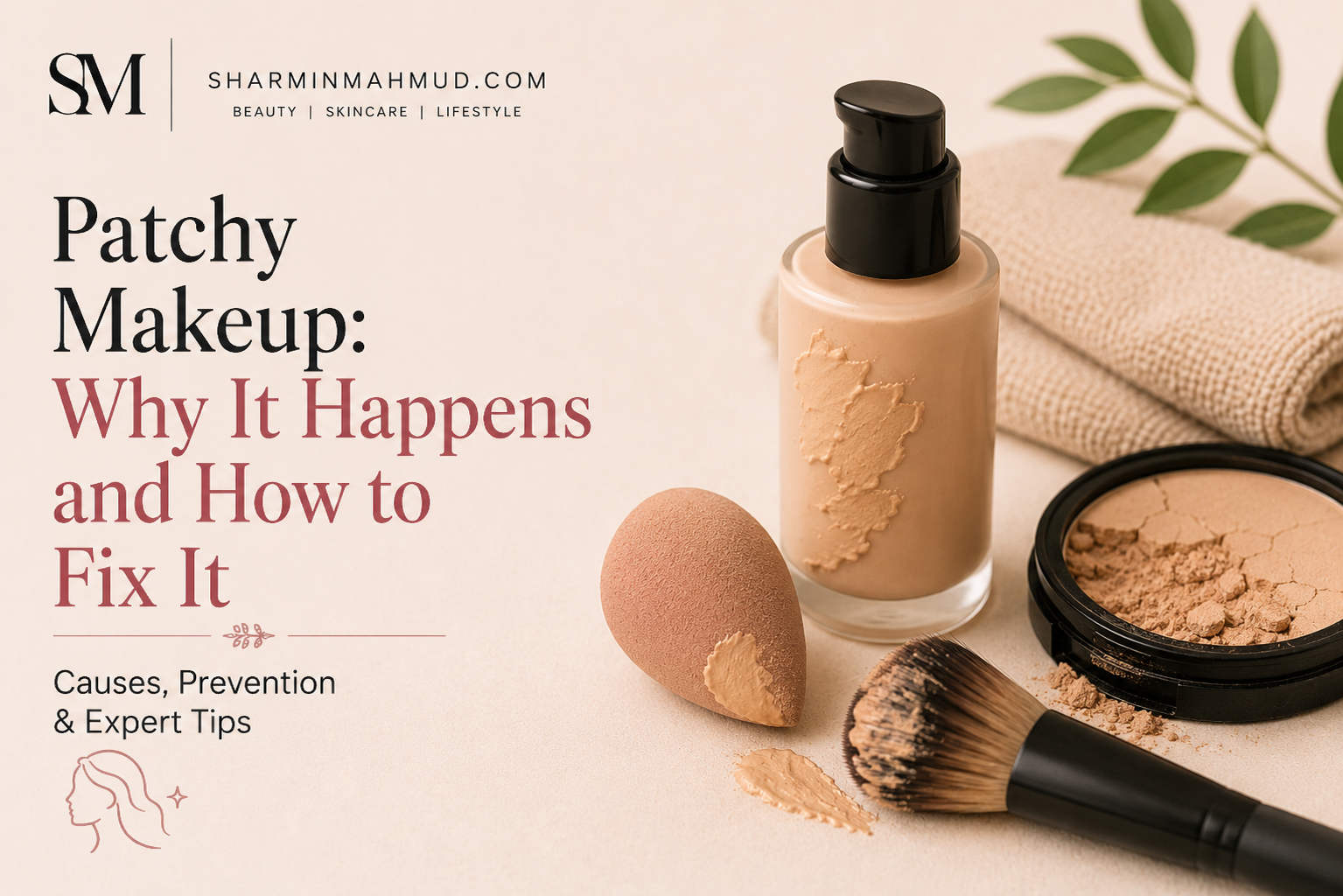
If your foundation looks smooth one minute but starts separating, clinging to dry spots, or appearing uneven the next, you are not alone.
Patchy makeup is a common beauty concern that can affect any skin type, whether you have dry, oily, or combination skin. From inadequate skincare prep to incompatible product formulas and application mistakes, several factors can leave your makeup looking less than flawless.
Let’s explore what causes patchy makeup, how to prevent it, and the best techniques to achieve a smooth, long-lasting finish every time.
What Is Patchy Makeup?
Patchy makeup is a base product or foundation that does not mix into a smooth, even layer on the skin; rather, it sits unevenly. Patchiness is a textural issue as much as a coverage issue, so you can apply a lot of product and still have patches.
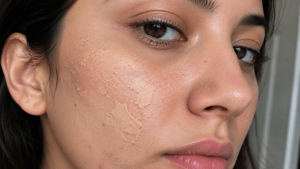
Signs Your Makeup Is Patchy
- Coverage appears uneven across the face.
- In some lighting conditions, dry flakes can be seen through the base.
- The foundation clearly splits, resulting in streaky lines.
- While some parts appear sheer or naked, others are cakey.
- Instead of remaining flat, makeup sticks to dry or rough skin.
Areas Where Patchiness Usually Appears
Patchiness isn’t random. It tends to show up in the same spots on most faces:
- Around the nose, where oil production and texture change quickly
- The chin, especially if it runs dry or breaks out often
- The forehead, particularly along the hairline
- Under the eyes, where skin is thinner and creases easily
- The jawline, where foundation often stops blending and leaves a visible line
The first indication of the cause of your patchiness is where it manifests. Consistently isolated patchiness in one area typically indicates a localized skin condition, such as an oily T-zone or a dry chin, rather than an issue with the product.
Relatable Read: What Is Strobing in Makeup? A Beginner’s Guide to Radiant, Dewy Skin
Why Does Makeup Look Patchy?
1. Inadequate Skin Preparation
The skin behind a foundation determines how good it is. Oil and debris remain on the surface when cleaning is neglected, preventing the product from gripping uniformly.
When exfoliation is neglected, dead skin cells accumulate and makeup sticks to rough areas rather than remaining flat. If you don’t use moisturizer, your skin becomes thirsty, which causes your foundation to lose moisture and appear dry and cracked in a matter of hours. Since each of these procedures addresses a distinct aspect of the issue, omitting even one can negate the other two.
2. Dry or Dehydrated Skin
These two are frequently mistaken, and in this case, the distinction is crucial. Oil is absent from dry skin, which is a skin type that doesn’t change much over time. Any skin type, especially oily skin, can experience dehydrated skin due to a lack of hydration, due to factors such as product use, nutrition, and temperature.
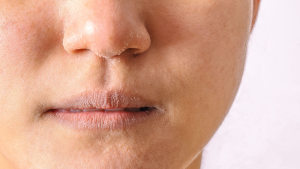
Both result in the same issue: a rough, uneven surface with no smooth surface for the foundation to cling to. Dehydrated skin is more difficult to treat since people tend to think they don’t need moisturizer if their skin continues to generate oil, which exacerbates the issue. In fact, it’s not uncommon to be both oily and dehydrated at the same time, which sometimes confuses those attempting to troubleshoot their regimen.
3. Excess Oil Production
Another type of patchiness is brought on by oily skin. As oil comes to the top during the day, foundation dissolves and moves around rather than adhering to a dry texture. Because of this, the foundation may appear flawless at 9 a.m. and blotchy by 1 p.m.; the base hasn’t altered, but the oil beneath it has. Because they tend to produce more oil than the rest of the face, the nose and forehead are typically the first places to exhibit this.
Relatable Read: How to Apply Makeup for Oily Skin That Lasts All Day
4. Using the Wrong Primer
The purpose of primer is to provide a sturdy surface between skincare and cosmetics, but using the incorrect one can actually harm you.
When overlaid with water-based foundations, silicone-based primers have a smooth texture but may pill. Water-based primers don’t provide the same hold for extended wear, but they seep into skin more organically. Because most people choose primer based on finish rather than formula compatibility, mismatched primer and foundation formulae are one of the most often ignored reasons for patchiness.
5. Incompatible Makeup Products
Water-based and oil-based products don’t always work well together. For instance, applying an oil-based moisturizer on top of a water-based foundation may cause the two to separate rather than blend on the skin. Within an hour of application, this manifests as streaking or a fractured, uneven texture. Although the general guideline of using water-based cosmetics before oil-based ones is helpful, it isn’t always applicable to all brands and formulas.
6. Applying Too Much Foundation
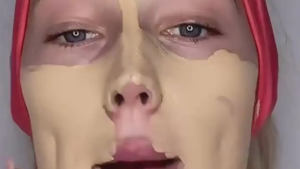
More product often has the reverse effect of more even coverage. Instead of integrating into the skin, heavy layers rest on top of it, making any texture underneath more noticeable rather than less. A common outcome is product accumulation around the mouth and nose, where movement is continuous. This is frequently a habit that results from attempting to “fix” patchiness by using more product, which typically exacerbates it.
7. Incorrect Application Technique
Technique and tools are just as important as the final output. Instead of pushing the product into place, dragging a brush across the skin can cause it to drag unevenly. Compared to sweeping strokes, stippling or bouncing motions spread foundation more uniformly. When boundaries like the jawline, hairline, or nose are not blended, there are noticeable lines where the product begins and ends.
8. Expired Makeup Products
Over time, the foundation shifts. Pigments can change, textures can thicken or thin, and oils can separate. Regardless of how well you apply it, expired products frequently behave and look different from when they were new. Once opened, the majority of liquid foundations have a twelve-month shelf life, though this varies by formula.
Relatable Read: How to Apply Toner the Right Way for Glowing Skin
How to Fix Patchy Makeup?
1. Start with Proper Skin Prep
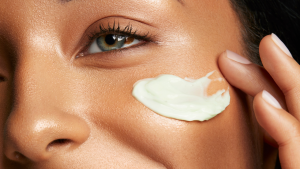
Without stripping skin, a mild cleanser gets rid of oil and debris. Use a moisturizing moisturizer that is appropriate for your skin type thereafter, and wear sunscreen during the day for the health of your skin as well as because many formulas make a smoother foundation base.
2. Exfoliate Regularly
Chemical exfoliants, such as AHAs or BHAs, are kinder to delicate skin since they remove dead skin cells without physically scrubbing. Physical exfoliants remove texture by hand, but if used excessively, they can cause skin irritation. For most skin types, exfoliating twice or three times a week is a good place to start. Daily exfoliation sometimes causes more issues than it resolves, such as the kind of irritation and flaking that directly results in uneven makeup.
3. Choose the Right Primer
Hydrating, dewy-finish primers are beneficial for dry skin. Formulas that mattify or obscure pores work better on oily skin. A hybrid technique, or using two distinct primers in separate areas of the face, is frequently required for combination skin.
4. Apply Thin Layers
Instead of applying everything at once, build coverage gradually with thin layers. Spot-conceal any imperfections or discolorations rather than applying a thicker coat of foundation to the entire face.
5. Use the Right Makeup Tools
For a blended, natural look, the product is pressed into the skin with a moist beauty sponge. More buildable coverage is provided by a dense foundation brush. For cream and liquid formulas, fingers work best since body heat helps the substance melt into the skin; nonetheless, hygiene is important in this situation, so wash your hands first.
6. Blend in Sections
Foundation can begin to set unevenly if it is applied to the entire face before blending. The product is kept workable, and streaking is minimized by working in parts, mixing each area before going on to the next.
7. Set Makeup Properly
To regulate shine without adding heaviness elsewhere, setting powder works best on oilier regions, such as the T-zone. Setting spray helps merge the layers and holds the finish in place. Applying powder all over the face, rather than only where it’s needed, is a common source of a cakey, uneven look.
Relatable Read: 8 Best Makeup Primers for Mature Skin That Hide Pores
Best Makeup Tips Based on Skin Type
Dry Skin
Look for a moisturizing primer, a dewy-finish foundation, and cream-based products where possible. Matte solutions tend to hold onto dry texture and enhance it rather than covering it. Layering a face oil under moisturizer, before primer, can also help smooth texture in particularly dry areas.
Oily Skin
To manage shine without making skin appear flat or excessively powdered, use a mattifying primer, an oil-free foundation, and a light, targeted powder application. Reapplying powder, which can accumulate and seem cakey by nightfall, is frequently less effective than blotting papers throughout the day.
Combination Skin
Both demands are balanced by multi-priming, which applies a hydrating solution to dry areas and a mattifying one to the T-zone. An even finish is maintained by strategically placing powder instead of applying it all over.
Sensitive Skin
Patch testing new products before applying them to the entire face helps identify responses early, and fragrance-free cosmetics lower the chance of discomfort. Although each person’s triggers are unique, mineral-based foundations are typically kinder on reactive skin.
Relatable Read: What Is the Best Makeup for Acne-Prone Skin? Dermatologist Picks
Common Makeup Mistakes That Cause Patchiness
A few habits show up again and again:
- Skipping moisturizer, even on oily skin
- Using dirty brushes and sponges, which apply old product unevenly
- Applying too much powder in one go
- Layering products with incompatible formulas
- Not letting skincare absorb before starting makeup
- Using foundation past its shelf life
- Applying foundation directly over peeling or flaking skin
Most of these are quick fixes once you know to look for them.
Relatable Read: How to Choose Makeup for Aging Skin? 10 Tips to Look Younger
How to Fix Patchy Makeup Without Starting Over?
If patchiness shows up mid-day, a full redo usually isn’t necessary.
Rehydrate the Area
A facial mist or a damp sponge pressed gently against the patchy area can soften and reblend products that’s started to look dry or cakey.
Remove Excess Product
A cotton swab lifts products from small, targeted areas. Blotting with tissue removes excess oil without disturbing the rest of the makeup.
Add Small Amounts of Foundation
Spot-correct with a small amount of product rather than reapplying across the whole face, and blend the edges carefully so the new product doesn’t create a visible line.
Refresh with Setting Spray
A light mist of setting spray can melt powder and foundation layers back together, restoring a more natural finish without needing to start over.
Prevent Patchy Makeup All Day
- Follow a consistent skincare routine suited to your skin’s actual needs
- Choose primer and foundation formulas that match your skin type
- Let skincare fully absorb before starting makeup
- Apply foundation in thin, buildable layers
- Keep brushes and sponges clean
- Set makeup only where needed, not all over
- Carry blotting papers for oil control throughout the day
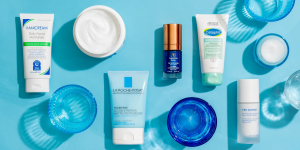
Recommended Products for Smooth Makeup Application
The right product category matters more than any single brand. Here’s what to look for in each step.
Hydrating Moisturizers
To retain moisture, look for products that combine an occlusive component, such as ceramides, with humectants, such as hyaluronic acid or glycerin. Because they hydrate without creating a greasy film that interferes with foundation, these work nicely under makeup. Richer creams are better for dry skin, while gel-based moisturizers are better for oily skin; however, using the incorrect weight for your skin type can negate the benefits.
Face Primers
Although they work better with silicone-based foundations, silicone-based primers are the best for blurring texture and pores. Hydrating primers that are water-based work better on dry skin and layer more consistently under most formulas. Oil-absorbing, mattifying primers help reduce shine, but they should be used sparingly because excessive use will eventually dry out skin.
Lightweight Foundations
As they require thinner application to get the desired look, buildable, medium-coverage foundations typically generate less patchiness than full-coverage products. Because they are made to sit closer to the skin, skin-tint and serum-foundation hybrids are worthwhile for anyone who has trouble with cakey buildup.
Beauty Sponges
The most natural finish is achieved by using a latex-free sponge that is moist rather than dry, which also helps keep the product from sitting unevenly on the surface. After a few uses, sponges should be cleaned since a dirty sponge reintroduces old, oxidized product, which directly causes patchiness.
Setting Sprays
For average or dry skin, hydrating setting sprays assist in blending layers together without further drying them out. Mattifying setting sprays help control shine without affecting the base below, making them ideal for oily skin. If your skin is dry, stay away from formulas that contain a lot of alcohol because they might hasten the dryness that first produces patchiness.
Relatable Read: 15 Best Skincare Brands in 2026
Final Thoughts
One of three factors is nearly usually the cause of patchy makeup: how your skin is prepared, if your products work well together, and how you apply them. Because it doesn’t address the root source of the patchiness, fixing the surface-level issue- applying more foundation rarely resolves it for very long.
Start with your skin. Next, examine the formulations for your products. Check your technique after that. A smooth, even finish lasts much longer once all three are in alignment, and you spend more time applying makeup and less time troubleshooting in the middle of the day.
Frequently Asked Questions (FAQs)
After a few hours, why does my foundation appear uneven?
Typically, as the day goes on, there is oil accumulation, dehydration, or product separation. Blotting sheets and setting spray can help control this without requiring a complete reapplication.
Can patchy makeup be caused by dry skin?
Indeed. Particularly around the nose, chin, and forehead, noticeable unevenness and stickiness result from dry or flaky regions that don’t retain foundation evenly.
Does primer prevent uneven makeup?
A smoother, more solid base is created with the proper primer; nevertheless, the incorrect primer for your skin type may exacerbate patchiness rather than improve it.
What causes my nose’s foundation to separate?
Separation is more noticeable on the nose than on the flatter sections of the face since it tends to produce more oil and has more visible pores and roughness.
For foundation, should I use a brush or a sponge?
Both are effective; a brush provides more buildable coverage, while a sponge typically produces a more natural, skin-like finish. Your desired finish and the amount of coverage your skin needs will determine the best option.
Can patchy makeup be fixed using setting spray?
It can help blend products together and revitalize the finish, but it won’t address patchiness brought on by inadequate skin preparation or an incompatible primer. It’s not a root-cause solution, but rather a touch-up tool.


